Split Screen
Julian Hoeber: Binocular Rivalry at Jessica Silverman, June 5-July 11, 2026

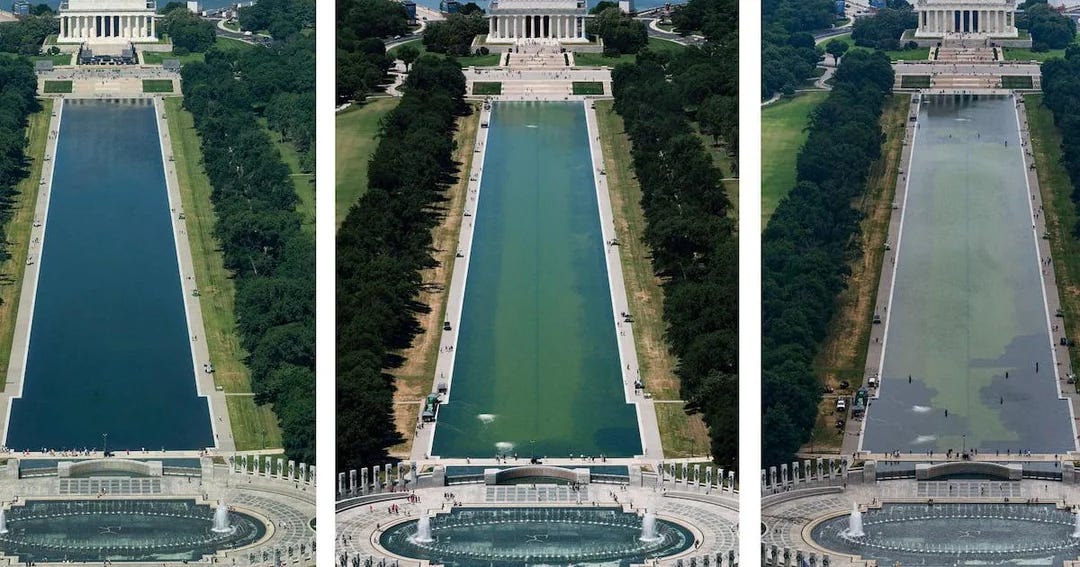
Media photograph of The Capitol Reflecting Pool (Not an image by Julian Hoeber)
The Capitol Reflecting Pool fiasco has generated a flurry of side-by-side imagery. These are comparative images that have brought that perennial discussion of photographic veracity into popular discourse. What is green is blue, blue is green, as well as an ombre expanse that some have compared to a Mark Rothko painting. People see what they want to see. The perceptual component is political, a literal split screen, a term so often invoked in our era. The pool image is a container for something mutable, temporally shifting and ripe with metaphor.
This debacle was unfolding in real time during Julian Hoeber’s solo exhibition at Jessica Silverman, and the visual connections are clear. The show, titled Binocular Rivalry, is very much about painting– eleven mixed-media canvases augmented by sculptural frames along with a 3D video– as a means of thinking through photographic images.
All the paintings here are photorealistic double views set side-by-side, inviting comparison. They suggest an optical phenomenon stemming from Hoeber’s inspiration in 19th-century stereoscopic viewing devices. Those created the illusion of dimensionality with two photographs seen through each eye and then synthesized. The stereoscope exists as an amusement–as with the 20th-century Viewmaster– but it is also rooted in philosophical questions of how and what we see. Hoeber, however, approaches dimension more metaphorically, socially, conceptually and historically.
All are present in Wall of the Communards, 2026, a small painting, a doubled aerial view of a green landscape and red-roofed buildings. It is the only image in the show sourced from a phone camera. This is made evident by a time stamp at the top: It’s 3:47, with 39 percent battery left and robust internet signal. This is not when the photograph, a drone’s perspective of a section of Père Lachaise cemetery in Paris, was shot, but when the image was accessed for the purposes of painting it. On the lower left of the left hand image there is a small binocular icon, the Lookaround feature on Apple’s map application. It allows for digital exploration, virtual wandering. That icon differentiates this image from the seemingly identical one to the right. This allusion to the magic of viewing, and traveling, in the 21st century, is depicted with the human hand, in oil and acrylic, as much as it also nudges a ‘Where’s Waldo?’ scrutiny of a politically charged location.
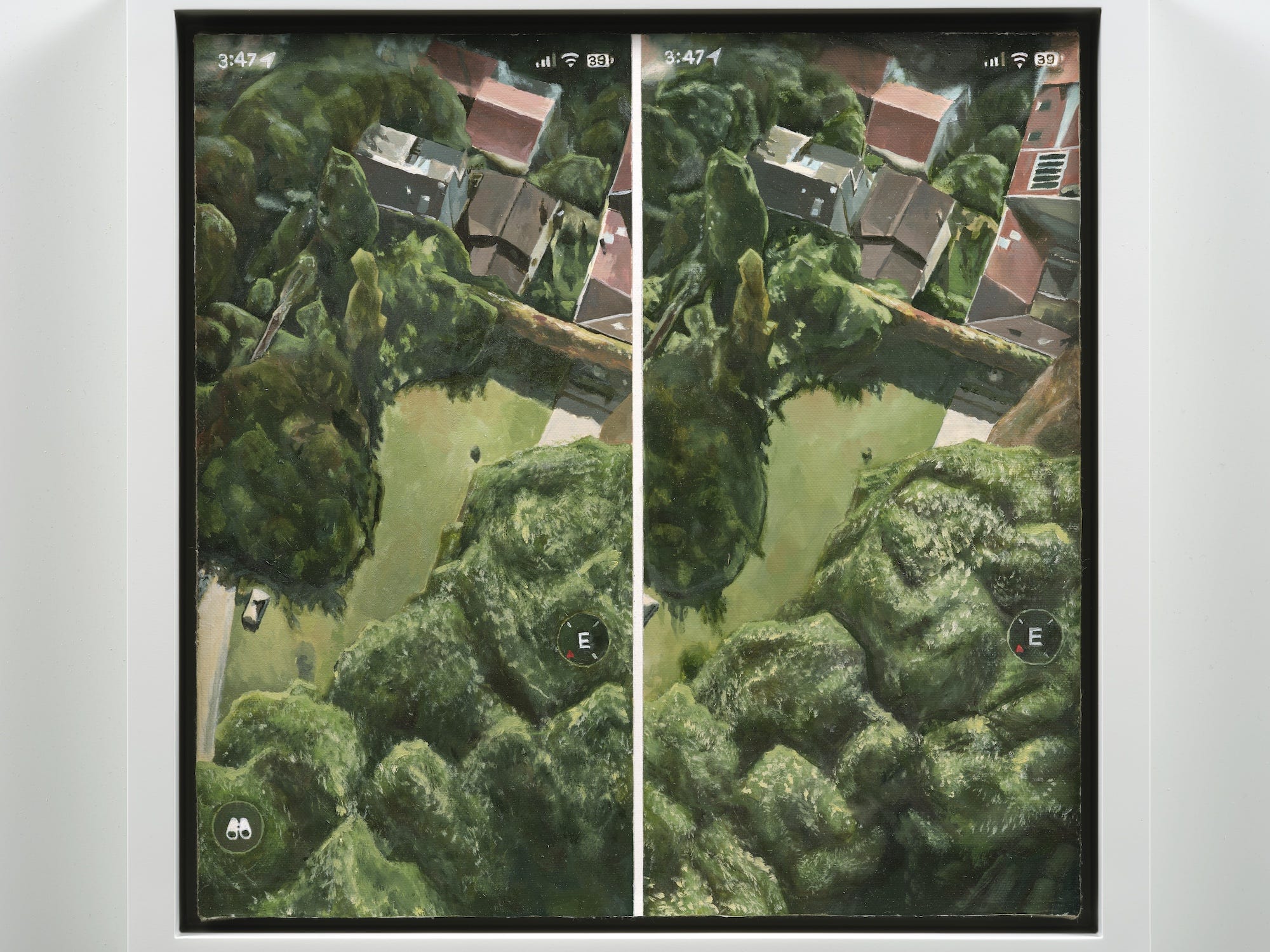
Wall of the Communards, 2026. Oil and acrylic on linen over panelFrame: 25 3/4 x 25 3/4 x 2 inches / 65.4 x 65.4 x 5.1 cm Painting: 12 x 12 x 1 inches / 30.5 x 30.5 x 2.5 cm (photo: Heather Rasmussen)
The stereoscopic suggestion invites closer looking. But moving nearer to the works in the show reveals the astounding painterly detail and the many layers of image and pattern– ghostly undulating Op moires, a nod to Bridget Riley, geometric designs suggestive of Anni Albers’s textiles. The canvases are abundant, labor intensive works, tightly composed, academic in tone, yet poetic in their meaning.
That is, the layers apply visually, to the mediums on the canvas, as much as the superimposition and juxtaposition of subjects and themes, which at times can seem as cryptic as they are appealing.
At the center of the more expansive Costus Comosus, 2026, Hoeber paints, twice, a tropical ginger plant, with red flowering leaves, a plant known for medicinal qualities. According to the gallery, the plant grows in The Huntington Library Botanical Gardens outside of LA. The landscape is composed of natural elements, but in an artificial way, the greenery transplanted from distant rain forests into a stage, an illusion of seeing truth. The plant is detailed to full bloom hyper-perfection (though the image’s edges are deceptively incomplete). Painting, by its very nature, is an illusion and Hoeber knows how to skillfully deploy its tricks.
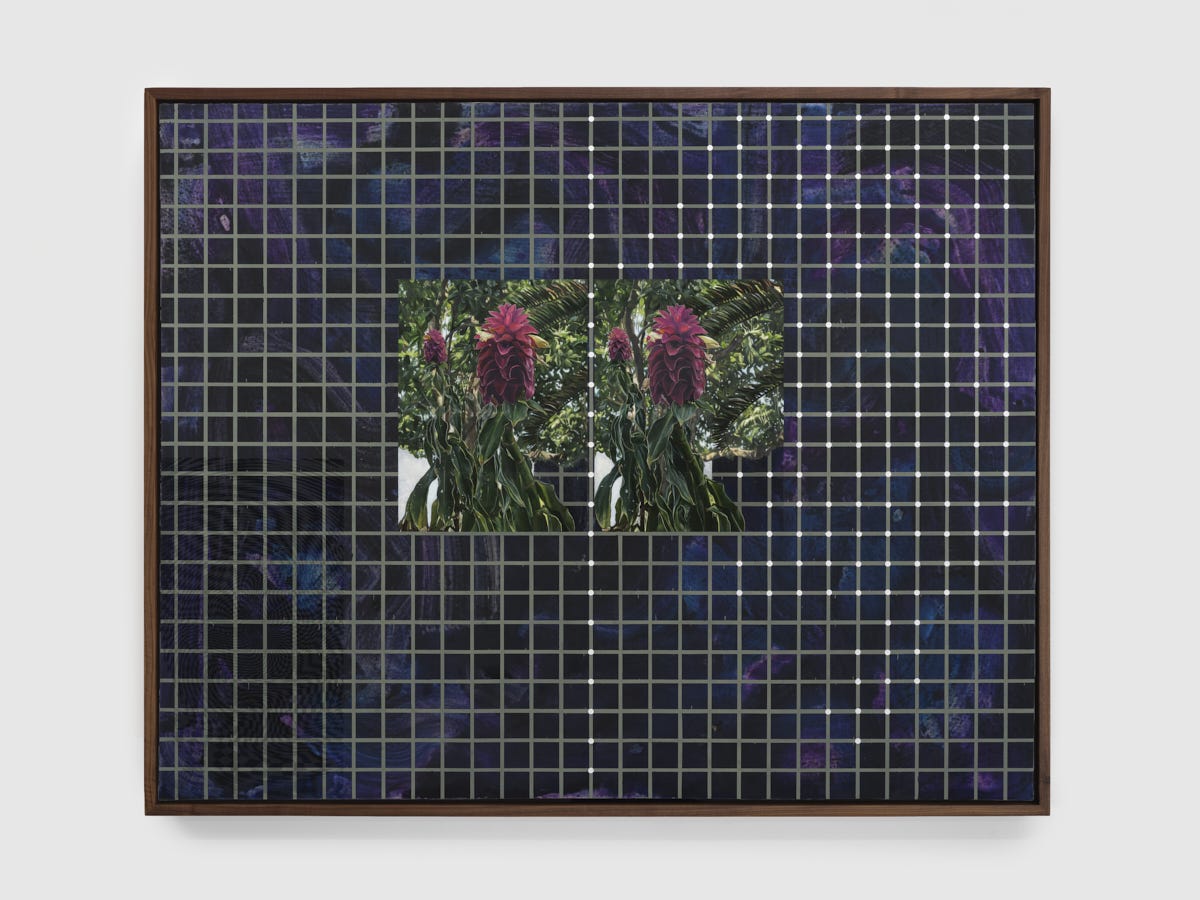
Costus Comosus, 2026. Oil, acrylic, Flashe, and collaged Bristol paper on linen over panel Frame: 49 1/8 x 61 1/8 x 3 3/8 inches / 124.8 x 155.3 x 8.6 cmPainting:47 1/2 x 59 5/8 x 3 inches / 120.7 x 151.3 x 7.6 cm (photo: Heather Rasmussen)
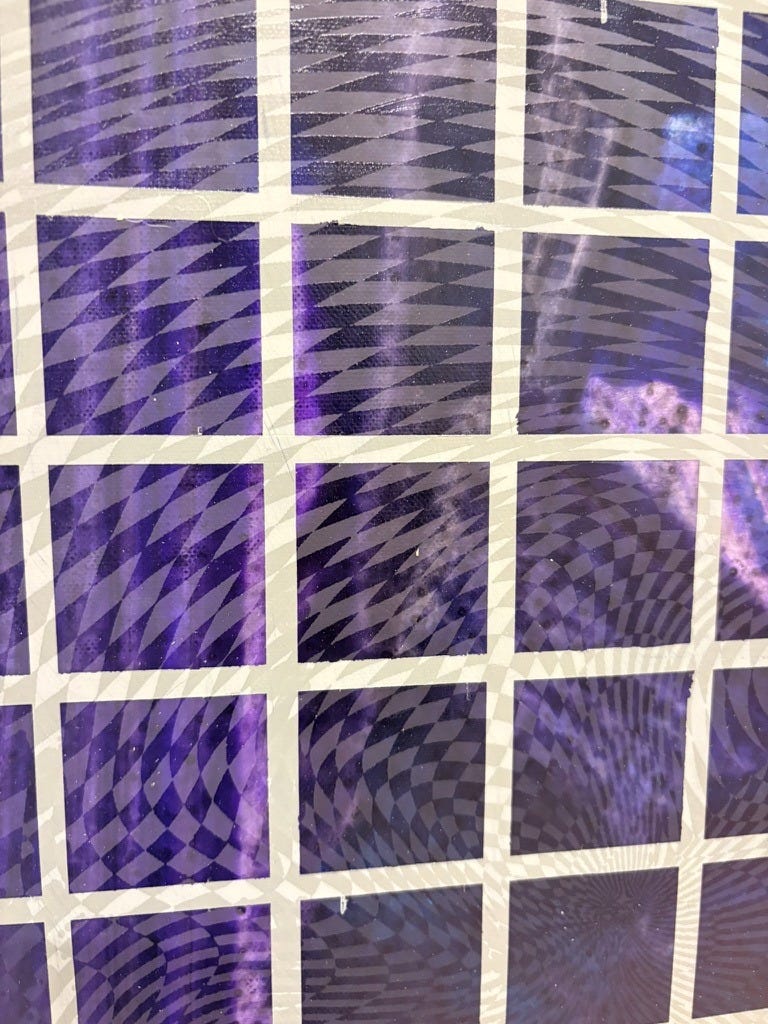
Costus Comosus, 2026, detail (photo: Glen Helfand)
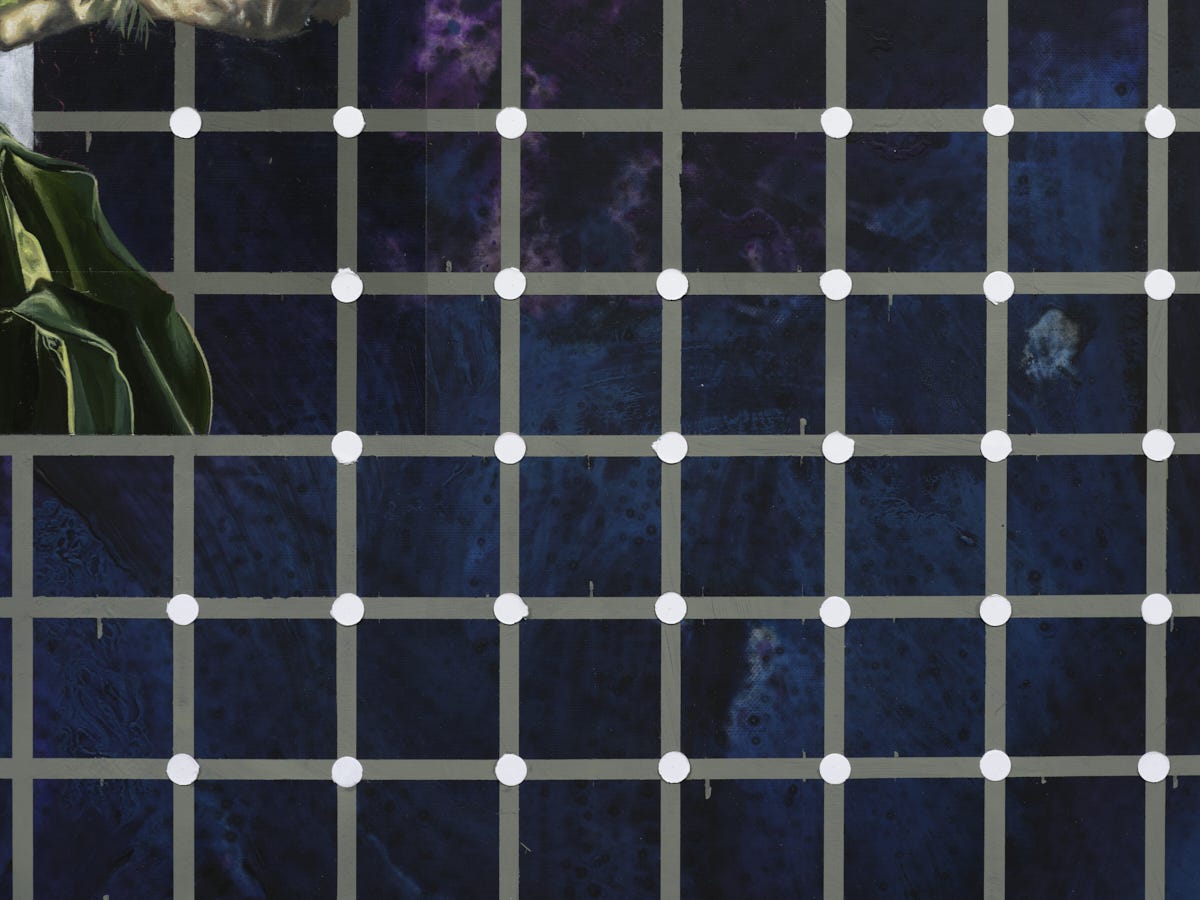
Costus Comosus, 2026, detail (photo: Heather Rasmussen)
The visual illusions here are dynamic. The doubles are positioned on a pale grey grid over a dark background, one, like most of the works here, that is far more complex than it initially appears– there are ghostly geometric patterns within. The grid is unadorned on the left side, but on the right, there are white dots (from hole punches) at many of the intersections that create a flickering optical effect, like winking googly eyes. The sense of movement conjures Piet Mondrian’s Broadway Boogie Woogie, 1942-43, a painting you can imagine as an animated city street.
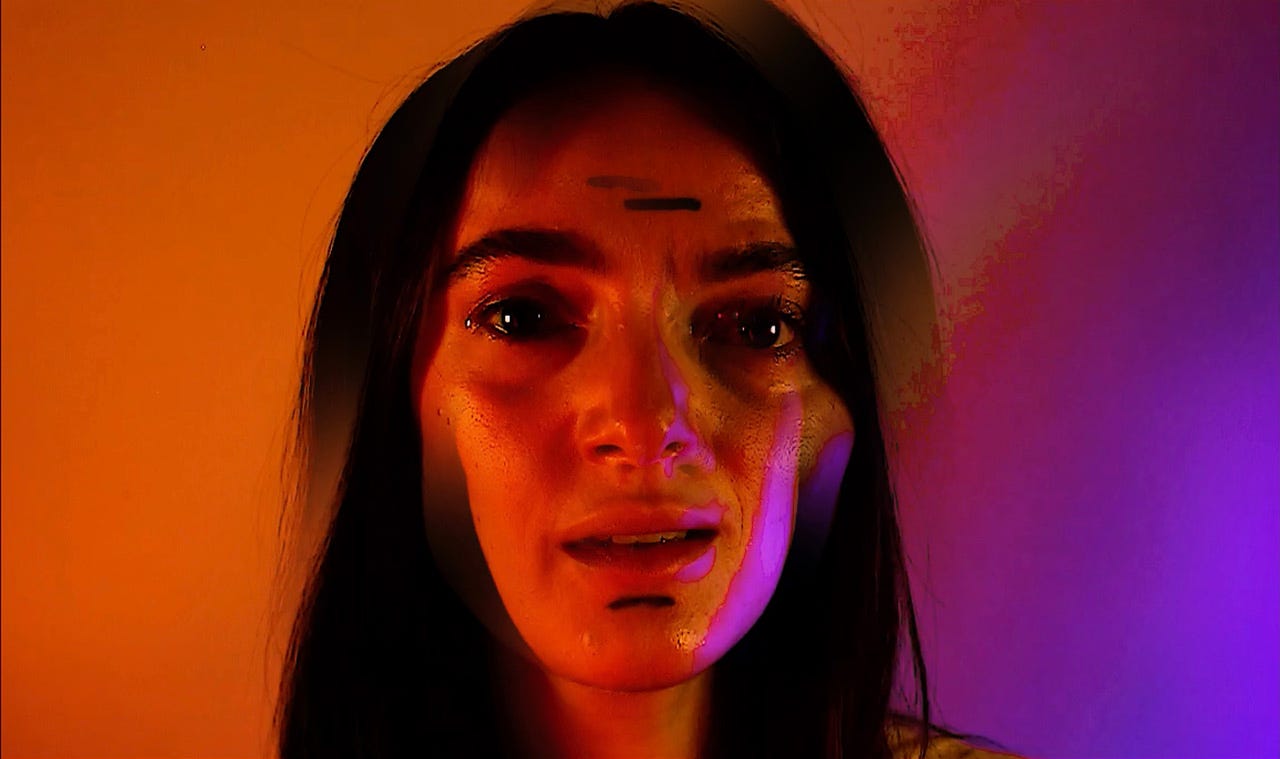
Counterpoint, 2026. Single-channel high-definition video with sound, and 3D glassesDuration: 4'31''(photo: Heather Rasmussen)
Hoeber’s earlier work had dimensional, sculptural qualities, something that he does here with custom frames, adding textured boundaries for the images. A 3D video, titled Counterpoint, 2026, continues the interrogation of stereoscopic perception by adding movement and pop music. Two women, who bear a slight resemblance, separately sing the Beatles’ song, I’m Looking Through You, an ear worm about looking, seeing something that morphs through emotional lenses. The singers are overlaid in image and voice. Viewed through 3D glasses, their faces merge, and reflect colored lights, though if you close an eye, they can be seen separately. It is a clear composition, a video made with a number of takes-- the production is revealed with the clapboard and off-camera director’s comments-- a construct. We perceive through various pieces, through layers and edits. What is side by side becomes a harmony of histories and interpretations.
Hoeber complicates the components as he combines them, engaging the history of tools used in creating the illusion of dimension– the hand, the camera, 3D video tricks. He uses these methods to seduce us into the quandary of reconciling what we see. It is an ambitious project, and ultimately an experiential one. You just have to see it.
